
In partnership with Engineers Without Borders Nepal (EWBN), WorldLink CSR is supporting school students in building skills relevant to innovation and entrepreneurship. This year, the i-Lab initiative was conducted at Shree Tribhuvan Adarsha Secondary School, Putalibazar, Syangja, providing Grade 9 students with hands-on, experiential learning through a school-based makerspace and a six-day Innovation Accelerator Program (IAP) aimed at addressing existing learning gaps.
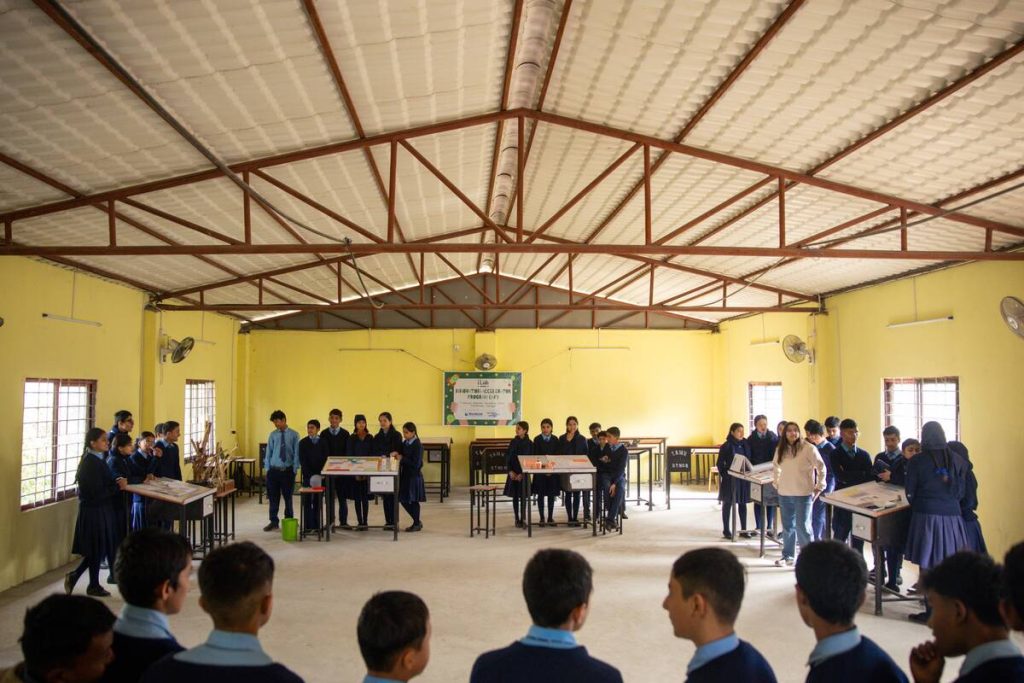
The program culminated in a formal showcase where 30 students, grouped into five teams, presented solutions to locally relevant challenges across Agriculture, Art & Culture, Education, Environment, and Health & Wellness. Through the process of identifying community problems, developing prototypes, and pitching their ideas, students gained practical skills in design thinking, collaboration, creativity, and entrepreneurship. Innovations on display included skincare products derived from orange peel waste, student artwork transformed into functional merchandise, handcrafted teaching aids, decorative items repurposed from forest waste, and portable paper soap designed to promote hygiene. The event drew local government representatives, school staff, private sector participants, and community members, broadening its reach and public impact. Ms. Anupa Bhandari Jalan, CSR Director and Promoter Shareholder, was present at the event. During her remarks, she stated that today is only the beginning. Believe in your abilities and trust your ideas and vision. Our country and communities need your talent, leadership, and innovation to drive meaningful social change.
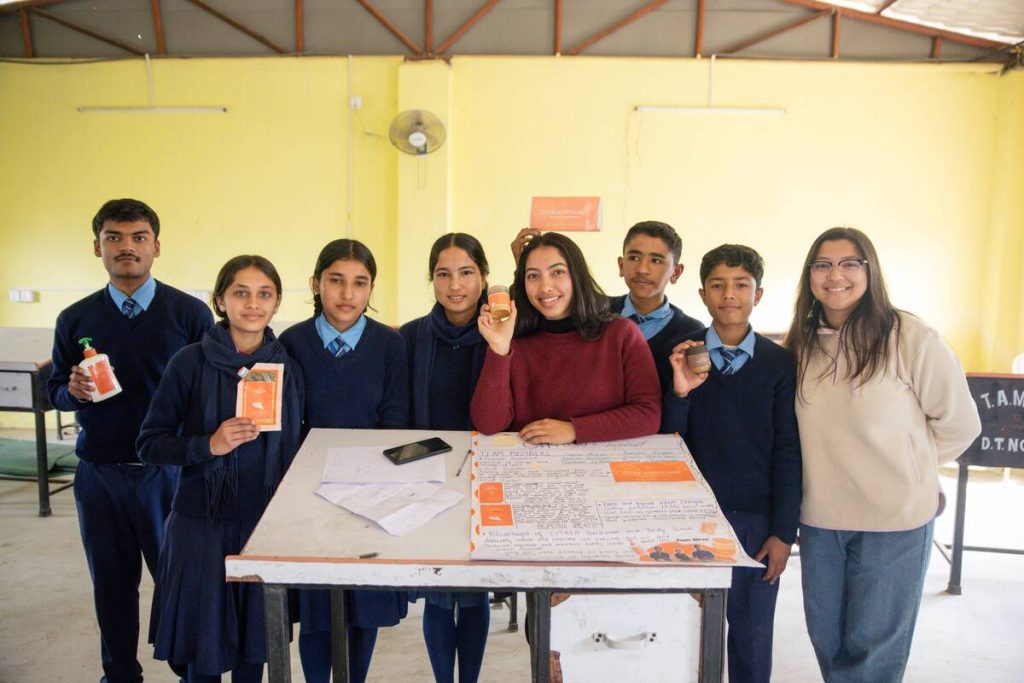
Beyond the showcase, the initiative strengthened student engagement, confidence, and problem-solving abilities while fostering inclusion and balanced gender participation. Teachers were equipped to sustain innovation practices in their classrooms, demonstrating that structured, place-based learning models can meaningfully enhance relevance and student agency, particularly in community schools supported by ongoing mentoring and programming.
Looking ahead, a dedicated focal person and teacher have been assigned to continue guiding students as they prepare for i-Jatra, a grand innovation showcase bringing together stakeholders from local governments, schools, civil society organizations, and the private sectors.


